
Filling a Gap on the South Side
Jacqueline Lasonde, founder of the Greater Syracuse South Side Neighborhood Association Community Food Pantry, has spent nearly a decade addressing food access in Syracuse. Today, the pantry serves up to 615 families each month.
“Our mission is to just fill in the gap between food affordability and accessibility,” she said. “Whether it's fresh fruits and vegetables or a variety of frozen meats and breakfast foods. It’s for anyone. Income is not part of our criteria.”
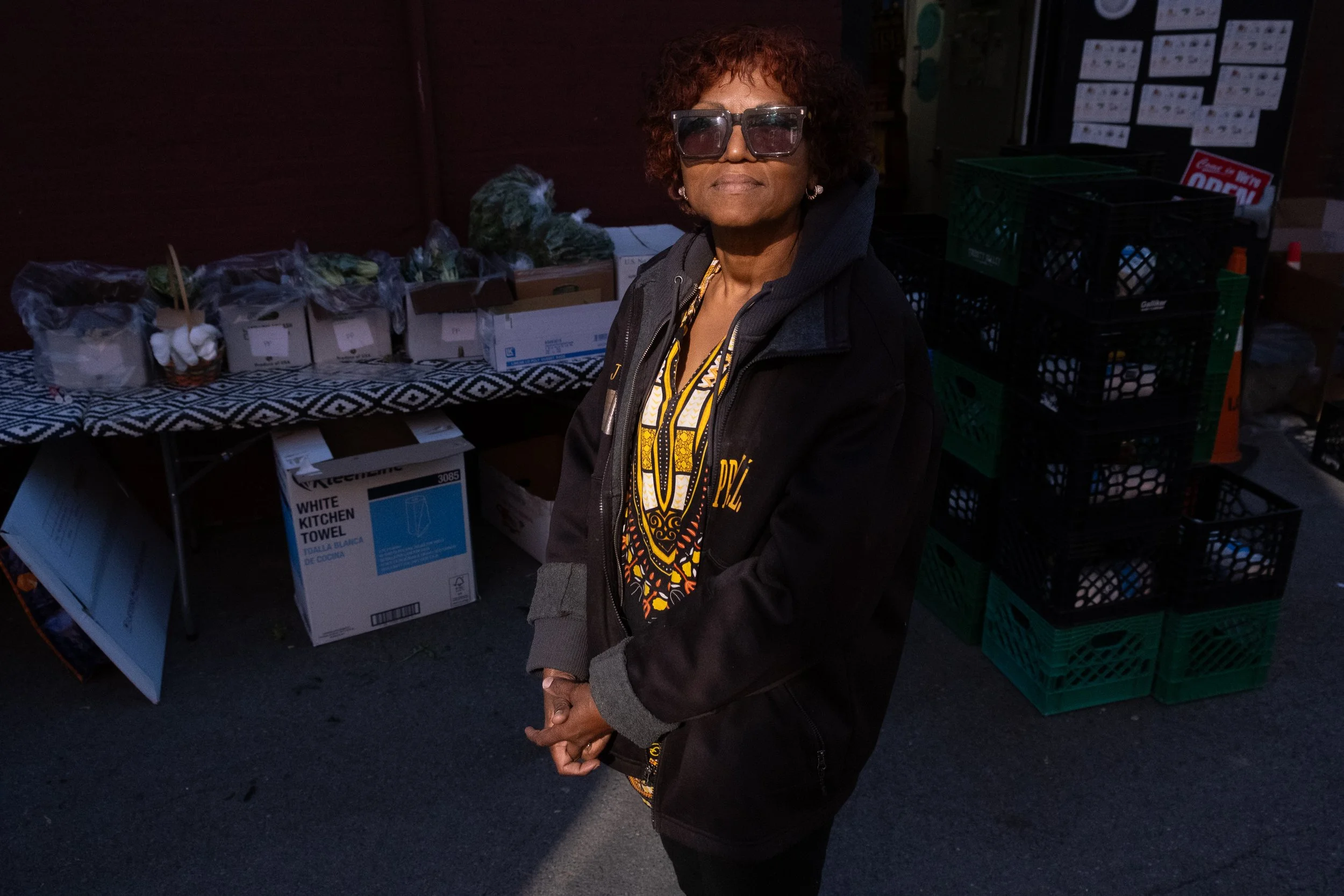
Jacqueline Lasonde outside of the South Salina food pantry. Photo by Matt Moyer.
Lasonde started the pantry after witnessing firsthand the lack of healthy, sustainable food options in the neighborhood while delivering food door to door.
“I was really concerned about what I saw,” she said. “We have a Burger King, we have Dunkin'. We have all this fast food, but nothing sustainable. Nothing where you can cook something, put your own flavoring on it, and make it as healthy as possible. Not to mention, we have no grocery store,” she added.
“I was very concerned about the health needs of the community.”
She challenges the language often used to describe neighborhoods like this.
“When people say food desert, I push back,” Lasonde said. “This is a food apartheid. This is an area that has had long-time investment, and then disinvestment.”
Beyond food distribution, the pantry has become a hub for community resilience and connection. For LaSonde, it’s never been just about groceries.
“Even though it’s an off day, it’s always on for us,” she said. “Food is an actual thing.”
Now, the organization faces an uncertain future as building ownership changes will force the pantry to relocate. For many families who rely on its walkable location in the community along South Salina Street, the stakes are high.
“In this space, we’ll have to move because they’re going to sell the building,” she said. “It’s thousands of dollars now that we have to figure out how to commercially move into another space. So our last move will be our last move. We’re determined to stay in this area because it’s walkable, because we have a lot of wheelchair folks now. It’s not fair.”
“It’s not fair to move just one more thing from them,” Lasonde repeated.
Her goal is to secure a permanent home for the pantry and community space, one the organization can call their own.
“We own, therefore we don’t move again.”
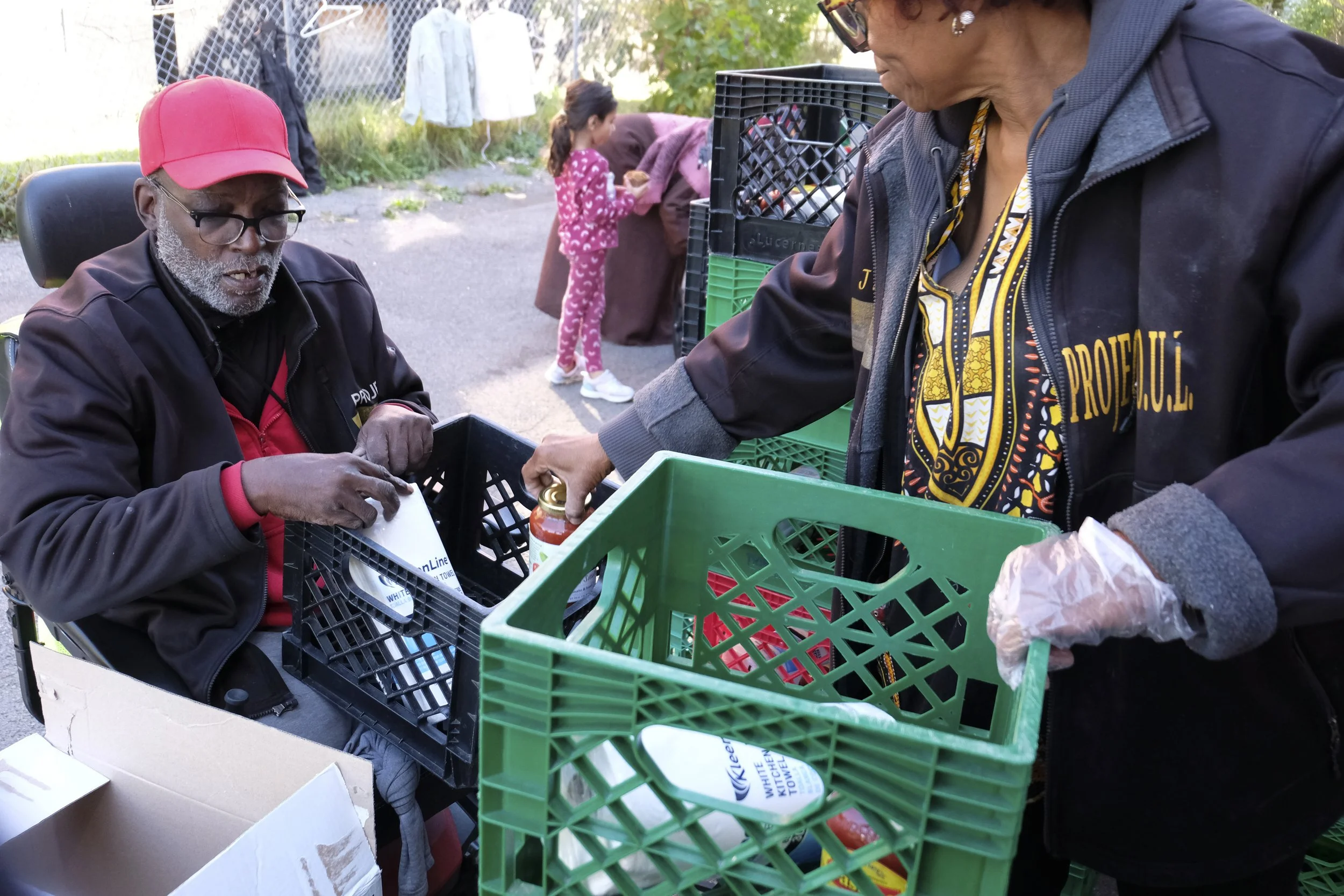
Lasonde and community helpers pack milk crates with food and personal care items for families to take home. Photo by Rabia Mustafa.
Video and story produced by Kayla Breen and Destinyi Fernandez.Photos by Matt Moyer and Rabia Mustafa.